Moving to Austin: A Local Guide for New Residents
Before moving to Austin, getting familiar with the city’s neighborhoods, housing options, commute patterns, and everyday amenities can help you get oriented and start narrowing down where you’d like to call home.
Moving to Austin, TX means getting to know a city with many different sides depending on where you are. Some areas put you closer to restaurants, music, and downtown, while others offer different housing options, easier access to major roads, or more distance from the city center.
This guide covers the practical things to think about before moving to Austin, from choosing a neighborhood and planning your commute to getting familiar with local parks, restaurants, events, and everyday life. Whether you're looking at a home in East Austin or considering a home in Round Rock, it can help you get oriented before making your move.
1. Get familiar with Austin’s layout
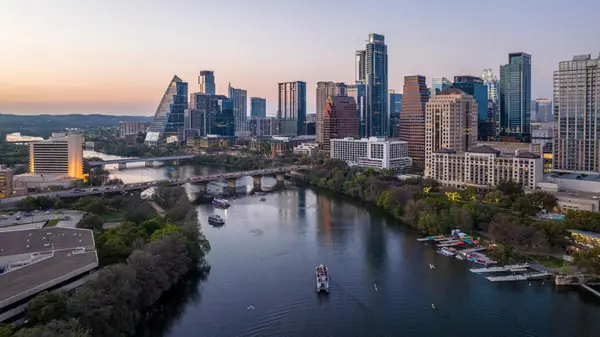
One of the first things to understand when moving to Austin is how spread out the area is. The city sits in the heart of Central Texas, with neighborhoods extending across both sides of the Colorado River. The city is loosely divided into distinct areas – Downtown, North Austin, South Austin, East Austin, and West Austin – each with its own personality, price point, and pace of life.
Your home search may also extend beyond Austin proper. Nearby communities include:
- Round Rock: North of Austin with a mix of established neighborhoods, newer development, shopping, and big employers.
- Cedar Park: A fast-growing area Northwest of Austin with suburban housing, retail, and access to US-183.
- Pflugerville: Northeast of Austin with a mix of established neighborhoods and newer development.
- Kyle and Buda: Popular among those looking for more space and lower costs.
- Manor: East of Austin with continued residential growth and new construction.
- Bee Cave and Lakeway: Upscale communities near Lake Travis in West Austin.
Looking at a map before touring homes can help you understand just how different two seemingly nearby locations may be once commute times and traffic are factored in.
2. Learn about the Austin housing market
If you're planning to buy after moving to Austin, it helps to get familiar with how the local housing market works before you start touring homes. Market conditions can vary by neighborhood, price point, and property type, so the experience of buying in one part of Austin may look very different from another.
Some homes may sell quickly or receive multiple offers, while others stay on the market longer or go through price adjustments. Looking at recent sales, days on market, and list-to-sale prices in the specific areas you're considering can give you a better sense of what to expect.
A local real estate agent can also help you compare neighborhoods, understand current competition, and decide how much flexibility you may have when making an offer.
>>Explore current trends: Austin Housing Market
3. Choose the right neighborhood for you
One of the most important decisions you'll make when moving to Austin is where to plant your roots. The city's neighborhoods vary widely in character, cost, and lifestyle, so it's worth taking time to figure out what matters most to you before signing a lease or making an offer.
Here are a few areas you may come across:
- East Austin: Close to downtown with restaurants, bars, coffee shops, entertainment, older homes, and newer development throughout the area.
- South Congress (SoCo): Iconic Austin energy with boutique shops, food trailers, and a strong sense of local identity. Great for those who want to be close to the action.
- Hyde Park: A historic, tree-lined neighborhood with a quiet, community-oriented feel.
- Mueller: A master-planned community built on a former airport site, including parks, restaurants, retail, apartments, condos, and single-family homes.
- Domain Area (North Austin): Offers apartments and condos near shopping, restaurants, offices, and major transportation corridors.
- Zilker and Bouldin Creek: South Austin neighborhoods beloved for their proximity to Barton Springs, Zilker Park, and a strong local dining scene.
- Round Rock and Cedar Park: Popular choice for people looking for more space and a suburban lifestyle without feeling too far from the city.
When choosing a neighborhood, consider your commute, your budget, your lifestyle, and how much you value walkability versus space.
3. Understand the cost of living in Austin
Cost is an important part of planning a move to Austin. According to Redfin’s cost of living calculator for 2026, the overall cost of living in Austin is about 3% lower than the national average. Housing costs are listed at 7% below the national average, while groceries are 4% lower, transportation is 2% lower, utilities are 1% lower, and healthcare is 4% lower.
Housing will still make up a large part of most budgets. Redfin currently lists a typical house for sale in Austin at about $530,000 and an apartment for rent at about $1,749 per month. Everyday costs can vary too; for example, Redfin lists the average monthly energy bill at about $218 and gas at around $2.92 per gallon.
When comparing neighborhoods or deciding whether to live in Austin proper or a surrounding community, look at the full picture rather than housing costs alone. Your commute, utilities, transportation, and other regular expenses can all affect what your monthly budget looks like after the move.
>>Compare costs: Cost of Living in Austin, TX
4. Look beyond downtown Austin
“One of my biggest pieces of advice for anyone moving to Austin is to explore beyond downtown,” states Kylee Kirby, owner of Kylee Kirby Photography. “Some of the best parts of living here are tucked into the different neighborhoods and surrounding areas, from locally owned restaurants and coffee shops to swimming holes, honky-tonks, markets, and community events. Austin is constantly growing and changing, but supporting local and finding your own favorite neighborhood spots is what really starts to make the city feel like home.”
>>Discover: Uncover the Best of Austin: The Ultimate Austin Bucket List
Swimming holes and outdoor escapes
- Barton Springs Pool: A beloved spring-fed pool in Zilker Park, open year-round and a true Austin institution.
- Krause Springs: A stunning natural swimming hole about 45 minutes west of Austin in Spicewood.
- Hamilton Pool Preserve: A breathtaking grotto and waterfall west of Austin (reservations required in peak season).
- Barton Creek Greenbelt: Miles of trails, cliff jumping spots, and swimming holes winding through South Austin.
Local eats and coffee
- Explore East Austin's restaurant corridor along East 6th Street and Cesar Chavez.
- South Congress and South Lamar are packed with beloved local breakfast and brunch spots.
- Keep an eye out for Austin's iconic food trailer parks, where some of the city's best meals come from windows cut into converted trucks.
The music scene
- Broken Spoke: A legendary two-stepping dance hall that has been a South Austin staple since 1964.
- White Horse: A beloved East Austin honky-tonk with live music nearly every night.
- Continental Club: One of Austin's most iconic live music venues on South Congress.
Markets and community events
- SFC Farmers' Market: Multiple locations throughout the city with local produce, food vendors, and artisans.
- Mueller Farmers' Market: A neighborhood staple every Sunday morning.
- Barton Creek Farmers Market: A longtime Austin favorite held on Saturdays.
5. Explore Austin’s job market
If work is part of the reason you're moving to Austin, location can make a meaningful difference in your home search.
The city has earned a reputation as a hub for technology, innovation, and entrepreneurship. Industries include:
- Technology: Austin's "Silicon Hills" is home to tech giants and a thriving startup scene.
- Healthcare: Baylor Scott & White, St. David's HealthCare, and Dell Seton Medical Center are among the region's largest employers.
- Government and education: The Texas State Capitol and the University of Texas at Austin are anchors of the local economy.
- Music, film, and entertainment: Austin's creative economy supports thousands of jobs in production, hospitality, and the arts.
- Manufacturing and logistics: Tesla's Gigafactory and Samsung's semiconductor plant have added significant blue-collar and engineering jobs to the region.
Major employers
Apple, Dell Technologies, Tesla, Google, Amazon, IBM, Oracle, Indeed, and the University of Texas at Austin are among the city's largest employers, with more companies announcing Austin expansions regularly.
Working remotely in Austin
If you're moving to Austin while working remotely, your priorities may look different.
Home office space, internet service, nearby coffee shops, and coworking options may matter more than proximity to a traditional employment center. Austin also has coworking spaces and professional communities throughout the city.
6. Think about how you’ll get around Austin
Austin is primarily a car-dependent city, and if you're moving from a more transit-heavy metro, that's something to prepare for. Traffic can be heavy on I-35 and MoPac (Loop 1), especially during peak commute hours.
Before choosing a home, map the trips you'll make most often during the times of day you'll actually be traveling.
Driving
Having a car is the most practical option for most Austin residents. Familiarizing yourself with key highways – I-35, US-183, Loop 360, and SH-130 – will help you navigate more efficiently. Many locals use SH-130 as a toll alternative to I-35 when traveling north or south of the city.
If you'll be commuting, don't judge distance by mileage alone. Test the route during your normal commute hours whenever possible.
Public transit
Capital Metro (CapMetro) operates Austin's public bus network and the MetroRail Red Line, which runs from Downtown Austin to Leander in the north. CapMetro is a solid option for commuters traveling along certain corridors and for getting downtown without dealing with parking.
Transit convenience varies significantly by location, so check the routes near individual homes if public transportation will be important to you.
Biking
Austin has invested in expanding its bike infrastructure in recent years, and neighborhoods like East Austin, Hyde Park, and South Congress are reasonably bikeable. The city also has a bike-share program, BCycle, with stations across the urban core.
Rideshare
Uber and Lyft are widely available throughout Austin and are a convenient option for nights out, airport trips, or anytime you'd rather skip the parking hunt downtown.
Neighborhood walkability
Walkability can vary quite a bit across Austin, so it’s worth looking at the specific area around a home rather than the neighborhood name alone. If being able to walk to restaurants, coffee shops, parks, or everyday errands is important to you, check the Walk Score and spend some time exploring the streets nearby.
7. Experience Austin culture, community, and events
Austin has a strong local identity, and the phrase “Keep Austin Weird” captures a lot of what people love about the city. It’s a reminder to support local businesses, embrace creativity, and make room for the independent shops, restaurants, venues, and traditions that give Austin its personality.
If you’re new to the city, getting involved in that side of Austin can be one of the easiest ways to start feeling connected. Explore local businesses, check out neighborhood events, and take time to find the places that make the city feel like your own.
>>See: What is Austin, TX Known For? 10 Things to Love About This City
Austin's music scene
Austin is recognized by its own city motto and global reputation as the Live Music Capital of the World, and live music is easy to find throughout the city. From venues along Red River Street to smaller stages, bars, and neighborhood spots, there are plenty of ways to experience the local music scene.
Annual events
- SXSW (South by Southwest): Every March, Austin hosts a festival for music, film, and interactive technology.
- Austin City Limits Music Festival (ACL): Two weekends every October in Zilker Park featuring hundreds of artists across multiple stages.
- Blues on the Green: A free outdoor concert series held at Zilker Park throughout the summer.
- Eeyore's Birthday Party: A quirky, beloved annual celebration in Pease Park that perfectly captures Austin's spirit.
- Austin Food and Wine Festival: A highlight for foodies featuring local chefs, tastings, and culinary demos.
Sports culture
- University of Texas Longhorns: UT sporting events, particularly football, draw large crowds throughout the season.
- Austin FC: The city's MLS soccer team has built a passionate fanbase since launching in 2021.
- Formula 1 U.S. Grand Prix: Circuit of the Americas hosts the Formula 1 U.S. Grand Prix each year.
Getting involved in the community
One of the easiest ways to start feeling connected after moving to Austin is to get involved locally. The city has neighborhood groups, volunteer organizations, community gardens, and events that make it easier to meet people and learn more about the area.
Moving to Austin: Final thoughts
Moving to Austin comes with a lot of choices, and where you live can shape your day-to-day routine. As you compare neighborhoods, look beyond the house itself and consider commute times, nearby amenities, housing options, and how easy it is to get to the places you’ll use most.
If you can, spend time in the areas you’re considering. Test your commute, walk around, and check out a few local spots to get a better feel for the neighborhood.
A local real estate agent can also help you compare different parts of Austin and narrow your search based on your budget and priorities.
Moving to Austin: FAQs
What is the most affordable area to live in Austin?
Depending on your budget and the type of home you’re looking for, you may find different price points in communities such as Pflugerville, Manor, Kyle, Round Rock, and Cedar Park. When comparing these areas with Austin proper, consider housing costs alongside commute times and how often you’ll need to travel into the city.
What is the cost of living in Austin?
While Austin is more affordable than cities like New York or San Francisco, costs have risen significantly in recent years. Housing tends to be the biggest expense, though Texas's lack of a state income tax helps offset everyday living costs for many residents.
How do I choose where to live when moving to Austin?
Start with your budget, commute, preferred type of home, and the amenities you want nearby. Then compare neighborhoods based on those factors. If possible, visit the areas you're considering at different times of day before making a decision.
Do you need a car in Austin?
Not necessarily, but having a car can make getting around Austin easier, especially if you live outside the areas served well by public transit. CapMetro operates buses and the MetroRail Red Line, and some neighborhoods are more walkable or bikeable than others. If you’re considering a home, check your commute and nearby transit options before deciding whether you’ll need to drive regularly.
Is it cheaper to live outside Austin?
It can be, depending on the community and the type of home you’re looking for. Areas such as Round Rock, Cedar Park, Pflugerville, Kyle, Buda, and Manor offer different housing options and price points than Austin itself. When comparing costs, also factor in property taxes, commute expenses, and how often you’ll need to travel into the city.
What should I consider before buying a home in Austin?
Start with your budget, commute, preferred type of home, and the amenities you want nearby. It also helps to compare neighborhoods based on walkability, transportation, access to major roads, and how the location fits your daily routine. If possible, visit the areas you’re considering at different times of day and test the commute before making an offer.
Categories
Recent Posts